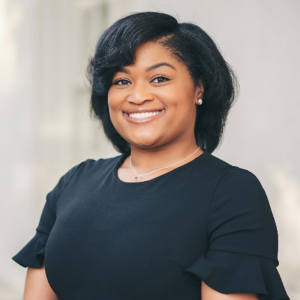
Sharyn Dougherty, Ph.D., M.P.H., C.H.E.S.
Dr. Dougherty earned her doctorate in Social and Behavioral Sciences in 2023. She currently serves as adjunct faculty for the department, teaching classes in fall and spring. She also works for the Social Security Administration.
What brought you to VCU and the PhD in Social & Behavioral Sciences, in particular?
Prior to enrolling in the program, I worked in the non-profit sector as a program manager and an assistant training director at local and national organizations. Throughout my time in these roles, I constantly asked "big questions" while trying to make sense of why we were putting bandaids on problems instead of exploring innovative ways to better serve our community. At a certain point, I realized that if I wanted to not only ask big questions but to also develop and implement innovative strategies, I needed additional credentials. The SBS program's focus on health equity as well as the close knit faculty-student environment made me feel right at home. It also helped that I knew former alumni (then students) of the program who were thriving in the program.
Tell us a little bit about what you do in your role at the SSA.
The division I support at the Social Security Administration oversees programs that support Social Security beneficiaries with obtaining and retaining employment. Over the past year my role has evolved quite a bit, but I currently serve as a program officer over a federal grant program where we support beneficiaries who are experiencing barriers to retaining meaningful employment. These barriers could inlcude transportation, accessibility accommodations, disability discrimination, access to vocational rehabilitation, or other relevant systemic issues that make it challenging to remain self-sufficient through employment. Although I no longer lead interventions, I am still able to use the skills I learned in the SBS program to assess the effectiveness and impact of our programs at a national level.
How did your education in the Ph.D. program prepare you for what you're doing now?
Beyond developing the necessary skills needed to lead research studies and evaluate grant programs, the Ph.D program taught me the "power of the pivot". I consider myself to be an self-taught expert in resilience. A lot of life experiences happen in graduate school, but you must stay the course and remember your "why". Our coursework often requires us to learn in ideal, or structured, settings. However, applying these skills in practical settings can pose so many unexpected challenges. The PhD experience helped me to learn that being booksmart is not enough to make meaningful change in our communities. We must be competent, flexible, resilient, and lead with compassion - all skills I mastered in the program.
What do you like best/find most rewarding about your current role?
It is a privilege to lead programs at a national level and for that work to impact millions of people across our nation. It is also incredibly rewarding to know that the work that I do on a daily basis helps people to retain their independence so that they can take care of themselves and their families. My job reminds me of the ways that we are all connected. I love my job and the people we serve.